Linguistics: What the Course Involves, Areas of Study and What Students Learn in Art/Humanities
Contents
Linguistics is the systematic study of human language. The programme examines how languages are structured, how they are used in communication and how different parts of language work together.
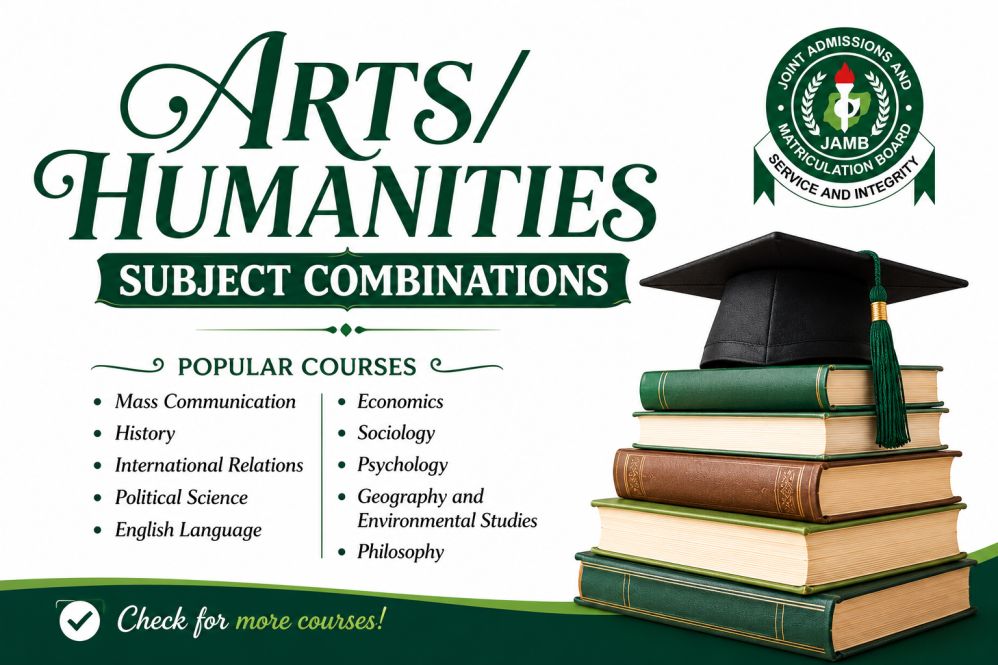
In the JAMB Arts/Humanities classification, Linguistics is listed among the programmes under the Faculty/School/College of Arts. The same grouping also contains related programmes such as Linguistics/Yoruba, Linguistics/Edo and Linguistics/Urhobo.
What Do Linguistics Students Study?
The programme looks at language from an analytical and academic perspective. Students can study how speech sounds are produced and organised, how words are formed, how sentences are constructed and how meaning is communicated.
Depending on the institution and the structure of the programme, students may also encounter areas concerned with language use, communication, language variation, Nigerian languages and linguistic research.
Major Areas Within Linguistics
- Phonetics: the study of speech sounds and how they are produced.
- Phonology: the study of how sounds function and are organised within languages.
- Morphology: the study of word formation and the structure of words.
- Syntax: the study of how words are arranged to form phrases and sentences.
- Semantics: the study of meaning in language.
- Pragmatics: the study of how context affects meaning and communication.
What Kind of Student May Enjoy Linguistics?
Linguistics may appeal to students who are curious about languages, communication, writing, speech, grammar, research and how people use language. An interest in Nigerian and African languages can also be useful, particularly where the programme or institution has a strong indigenous-language focus.
Skills Students Can Develop
- Language analysis
- Critical thinking
- Research and academic writing
- Communication
- Observation and analytical reasoning
- Understanding of language structure and use
The exact course structure can vary between universities, so candidates should check the institution's programme details alongside the admission information. The JAMB admission document used for this guide lists Linguistics as an Arts/Humanities programme and provides institution-specific entry conditions.
For a closer look at the admission conditions, candidates can also refer to the document below.

UTME2027 Editorial Team
The UTME2027 Editorial Team publishes accurate, timely and well-researched JAMB news, admission updates, CBT preparation guides and official educational information for Nigerian students. Every article is reviewed before publication to ensure accuracy and clarity.