Philosophy and Religious Studies: What Students Learn in the Art/Humanities Programme
Contents
Philosophy and Religious Studies is an interdisciplinary programme that brings together the study of philosophical ideas and the study of religion. It provides an opportunity to examine questions about knowledge, existence, values, beliefs, human life and the religious traditions that have influenced individuals and societies.
Philosophy encourages students to examine ideas carefully, question assumptions and develop reasoned arguments, while Religious Studies focuses on religion, religious beliefs, traditions and their place in human society. Studying both areas together can give students a broad perspective on intellectual, ethical, cultural and religious issues.
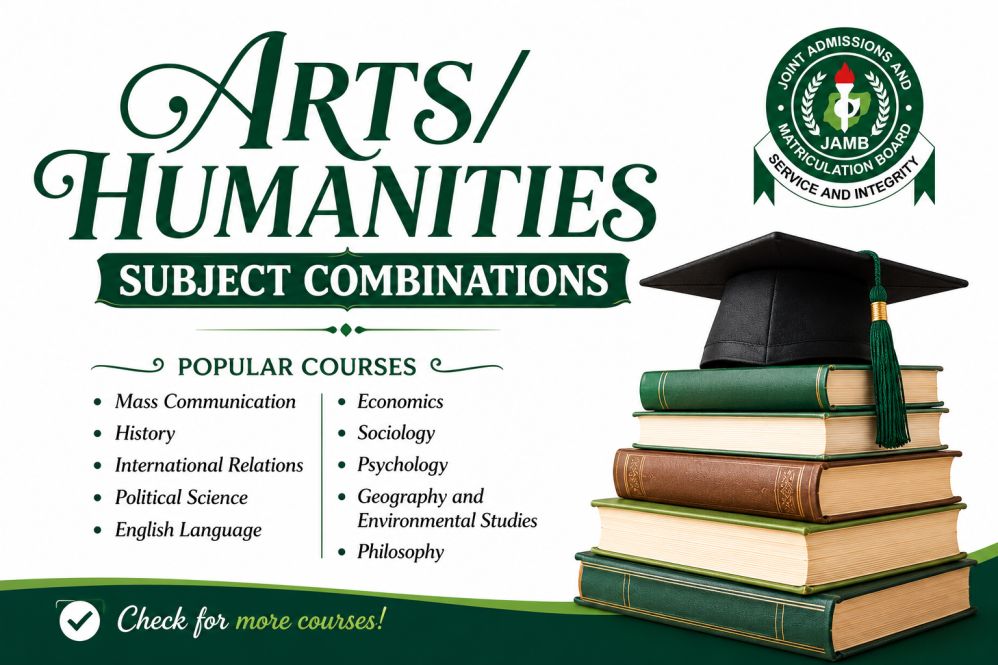
In the JAMB brochure, Philosophy and Religious Studies appears as programme number 63 within the Arts/Humanities listing under the Faculty/School/College of Arts. The brochure lists it separately from Philosophy, Religious Studies and other related programmes.
What the Programme Is About
The programme combines two closely related fields. Philosophy deals with the critical examination of ideas and fundamental questions, while Religious Studies examines religion and its different expressions, beliefs and traditions.
This combination can expose students to both logical and critical inquiry and the study of religious and cultural thought. It can therefore be suitable for students who enjoy asking questions, examining different viewpoints and discussing issues relating to human values and society.
Areas Students May Encounter
- Philosophical thought and reasoning
- Logic and critical thinking
- Ethics and moral questions
- Knowledge and human understanding
- Religion and religious beliefs
- Religious traditions and practices
- Religion and society
- Cultural and intellectual thought
- Interpretation and analysis of ideas
- Research and academic inquiry
Skills the Course Can Help Develop
Because the programme involves examining ideas and interpreting beliefs and traditions, students can develop useful skills in critical thinking, reasoning, communication, research, interpretation and structured argument.
These skills can be useful beyond the classroom because many academic, administrative, educational and organisational environments require people who can evaluate information, communicate clearly and consider different perspectives.
Who May Enjoy Philosophy and Religious Studies?
The course may be particularly interesting to students who enjoy Philosophy, Religious Studies, History, discussions about society and questions concerning human values and beliefs. It may also suit students who prefer subjects that involve reading, analysis, interpretation and thoughtful discussion.
Its Place in Art/Humanities
The JAMB brochure places Philosophy and Religious Studies within the Arts/Humanities grouping. Candidates should also note that the programme is presented as a distinct course rather than being merged with Philosophy or Religious Studies. That distinction matters when checking the institutions and admission information attached to the exact course title.
What Candidates Should Keep in Mind
Philosophy and Religious Studies offers a combination of two fields that can lead students into the study of ideas, values, beliefs, traditions and society. Its interdisciplinary nature can give students a broad academic foundation while allowing them to develop strong analytical and communication abilities.
For further information on the programme and the institutions listed for it, candidates can consult the admission document below.

UTME2027 Editorial Team
The UTME2027 Editorial Team publishes accurate, timely and well-researched JAMB news, admission updates, CBT preparation guides and official educational information for Nigerian students. Every article is reviewed before publication to ensure accuracy and clarity.