What Is Philosophy? Understanding the Programme and What Students Study in Art/Humanities
Contents
Philosophy is the systematic study of fundamental questions about knowledge, reality, existence, values, reasoning and human life. The programme encourages students to examine ideas carefully, question assumptions and develop well-reasoned positions on important issues.
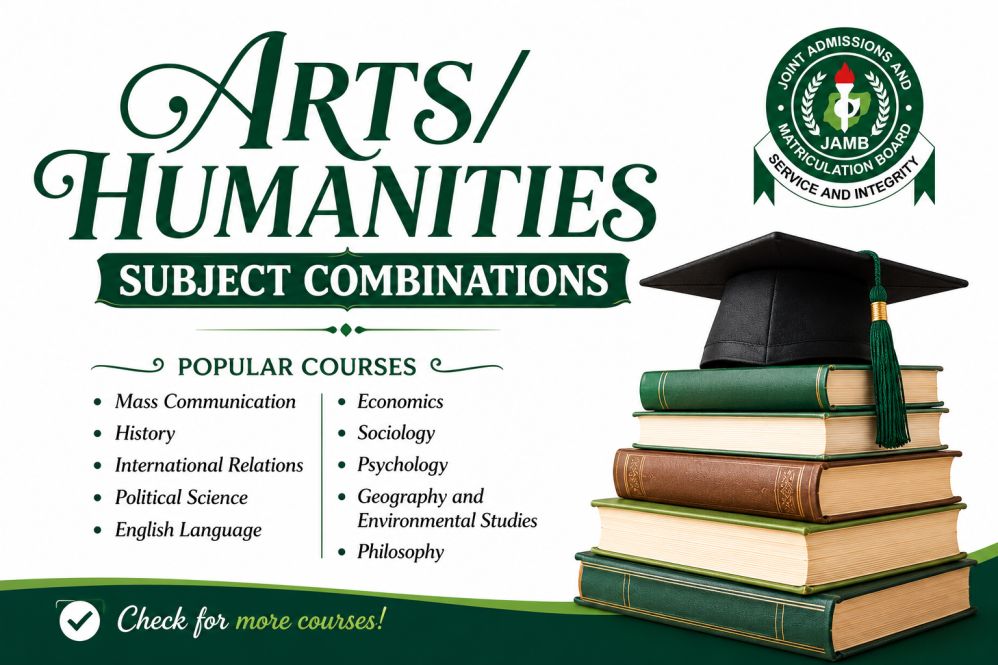
In the JAMB brochure, Philosophy is listed as programme number 62 under the Arts/Humanities grouping, alongside other programmes such as History, Peace Studies and Philosophy and Religious Studies.
What Students Study in Philosophy
A Philosophy programme can expose students to different branches of philosophical thought and methods of examining arguments and ideas. Students may encounter areas such as:
- Logic and reasoning
- Ethics and moral philosophy
- Epistemology and the study of knowledge
- Metaphysics and questions about reality
- Political and social philosophy
- Philosophy of religion
- Philosophy of science
- History of philosophical thought
- Critical analysis and argumentation
The Nature of the Programme
Philosophy is largely analytical and discussion-based. Students are expected to read arguments, identify assumptions, compare different positions and construct their own reasoned responses. The course therefore requires more than simply memorising the views of philosophers.
Students may also develop the ability to distinguish between strong and weak arguments, analyse complex questions and communicate their conclusions clearly.
Who May Be Interested in Philosophy?
Philosophy may appeal to students who enjoy asking questions about why people believe certain things, how we know what we know, what makes an action right or wrong and how ideas influence society.
It can also suit students who enjoy reading, reasoning, debate, writing, analysis and intellectual discussion.
Skills Philosophy Can Develop
- Critical thinking
- Logical reasoning
- Problem-solving
- Research and analysis
- Clear written communication
- Argument evaluation
- Independent thinking
Philosophy as an Art/Humanities Programme
The programme is presented within the Arts/Humanities section of the admission document. Candidates should still check the exact institution because admission conditions can vary considerably between universities offering the same course.
What Candidates Should Keep in Mind
Philosophy provides a broad intellectual foundation rather than training students for only one occupation. The analytical and communication skills developed through the programme can be applied in different professional and academic settings.
For additional admission details and institution-specific conditions, candidates can refer to the document below.

UTME2027 Editorial Team
The UTME2027 Editorial Team publishes accurate, timely and well-researched JAMB news, admission updates, CBT preparation guides and official educational information for Nigerian students. Every article is reviewed before publication to ensure accuracy and clarity.